



Author: Revaz Topuria, Research Fellow
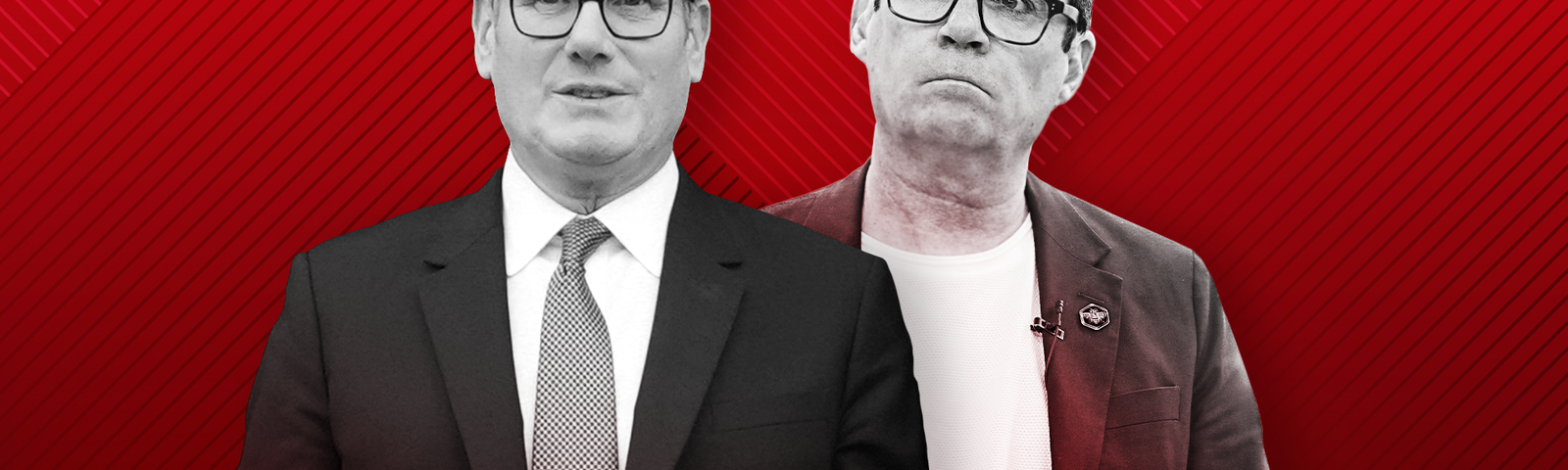
On the morning of 22 June 2026, Sir Keir Starmer stood outside 10 Downing Street, thanked his wife in an emotional speech, and announced that he would resign as leader of the Labour Party, and consequently as Prime Minister. By now, this image has become almost familiar: a British politician who, shortly after achieving public support and electoral triumph, leaves office. Over the past decade, Britain has witnessed this scenario no fewer than seven times.
Yet behind this now-familiar ritual lie more interesting questions: why did Starmer’s popularity collapse so quickly, how did the Labour Party’s internal machinery respond to the crisis, and how did Andy Burnham, the former Mayor of Manchester, emerge as the clear favourite to replace him?
Why Did Keir Starmer Resign?
Starmer’s resignation was not triggered by a single major scandal or one catastrophic mistake. Rather, it was the culmination of structural weaknesses that had accumulated over several years, combined with a series of developments that ultimately left him with virtually no room to manoeuvre.
These structural problems had been developing for years. Despite winning a comfortable parliamentary majority in July 2024, Starmer never succeeded in building durable public support. According to YouGov polling, his approval rating had fallen to –57 by early 2026—one of the lowest ratings ever recorded for a British Prime Minister, surpassed only by Liz Truss.
Many Labour voters felt that the “change” promised during the 2024 election campaign had failed to materialise. At the same time, Starmer was forced to introduce several unpopular policies while also failing to fulfil many of his campaign promises. Britain’s economic performance further compounded these difficulties. According to projections by the International Monetary Fund, the UK economy was expected to grow by only 0.8% in 2026.
This political vacuum allowed Reform UK, led by Nigel Farage, to establish a consistent lead in public opinion polls. Simultaneously, the Green Party of England and Wales, under Zack Polanski, successfully attracted left-wing voters dissatisfied with Labour’s increasingly centrist and centre-right positions on social policy and immigration.
These political challenges were compounded by an internal scandal surrounding the appointment of Peter Mandelson as Britain’s ambassador to Washington. In September 2025, after details emerged regarding Mandelson’s friendship with Jeffrey Epstein, he was dismissed from his post. However, the issue resurfaced in the spring of 2026 when it became public that Britain’s security services had advised against Mandelson’s appointment, but the Foreign, Commonwealth & Development Office had ignored that recommendation. The fallout was severe. Starmer’s Chief of Staff and several senior government officials resigned, further reinforcing the public perception that those at the top of government were incapable of making sound decisions.
Nevertheless, the immediate catalyst for Starmer’s resignation was electoral defeat. The 7 May 2026 local and devolved elections were widely viewed as a referendum on Starmer’s leadership. Labour lost nearly 1,500 council seats, with the overwhelming majority of those losses benefiting Reform UK, which subsequently gained control of fourteen local councils. In the aftermath, Wes Streeting, the Health Secretary, resigned from the Cabinet, citing a loss of confidence in Starmer’s leadership. He was soon followed by Defence Secretary John Healey, previously regarded as one of Starmer’s closest allies. Altogether, nearly twenty ministers resigned from Starmer’s government during its two years in office.
The final blow came during the Makerfield by-election on 18 June, where Andy Burnham secured an impressive victory, winning a seat in the House of Commons of the United Kingdom—a prerequisite for becoming a candidate for the premiership within Labour. For the first time, the party now possessed a genuinely popular and credible alternative to replace the Prime Minister.
It is worth noting that the Labour Party’s National Executive Committee banned Burnham from contesting an earlier by-election in January 2026. However, by May, Starmer’s weakened position had become apparent. As a result, Josh Simons deliberately vacated the Makerfield seat so that Burnham could stand there as the Labour candidate and return to Parliament.
For his part, Andy justified that gamble by defeating the Reform UK candidate and winning 55% of the vote, representing a ten-percentage-point improvement compared to Labour’s result in 2024.
This became Burnham’s announcement of a “moment of change.” At the same time, Starmer insisted that he would resist any challenge to his leadership, but he very quickly realized that he had lost support both within the Cabinet and inside the party. Consequently, on Monday he informed the King of his resignation and announced the timetable for selecting a new Prime Minister.
Nominations for candidates will begin on 9 July and end on 16 July, while the winner from among the nominated leadership candidates is expected to be determined by 1 September.
Just a few hours after this announcement, Wes Streeting, who had secured the support of the required 81 Members of Parliament necessary to be nominated for the leadership, announced that he would not stand as a candidate and would instead endorse Burnham, effectively determining the identity of Labour’s next Prime Minister.
What Happens Now – How Will the Next Prime Minister Be Selected?
The resignation of a British Prime Minister does not automatically trigger a new general election. The outgoing party leader remains Prime Minister until his or her party selects a successor, after which the Prime Minister formally resigns before the Monarch. The Monarch then asks the new party leader to form a government as the individual most likely to command the confidence of the House of Commons. Unless the new Prime Minister dissolves Parliament, the next general election will not take place until 2029.
As for selecting the new party leader and Prime Minister within the Labour Party, the leadership election process begins either when the existing leader resigns or when 20% of Labour Members of Parliament (81 MPs) nominate a challenger. However, it is essential that leadership candidates hold a parliamentary seat at that time (which is precisely why Simons vacated the Makerfield seat, allowing Burnham to contest it).
Afterward, the winning candidate is chosen through an internal party election under the principle of “one member, one vote.”
Eligible voters include party members, registered supporters, and affiliated trade union members. If Burnham faces no serious challenger, the vote itself will become largely symbolic, and the process will effectively amount to a “coronation.”
Naturally, the question arises as to why and how Burnham became Labour’s uncontested candidate. Burnham’s emergence as the consensus candidate is not simply a matter of name recognition; it reflects the convergence of interests among Labour’s leading figures.
Wes Streeting, representing the party’s centre-right faction, concluded that confronting the clear frontrunner would only inflict further damage on Labour. At the same time, he assessed his own chances modestly and decided to “give Andy a chance.” Streeting’s decision significantly increased Burnham’s prospects of being elected unopposed, without an internal party contest.
Angela Rayner, representing Labour’s soft-left wing, stepped down as Deputy Prime Minister in 2025 after failing to satisfy ethical standards of conduct. As a result, these circumstances considerably weakened her prospects.
David Lammy, the Deputy Prime Minister, remained openly loyal to Starmer’s government and, despite the leadership transition, publicly confirmed that he would continue implementing the existing defence policy. Accordingly, he has not even considered entering the leadership race. Against this background, it appears highly unlikely that any other influential Labour politician will emerge to challenge for the party leadership.
Burnham’s advantage, by contrast, lies in the political capital he has accumulated over the course of a decade. Having served as Mayor of Greater Manchester since 2017, and previously as a Member of Parliament and Secretary of State for Health under Gordon Brown, he has built a reputation as a popular politician capable of delivering practical policies. Andy has consistently portrayed himself as the “Champion of the North,” positioning himself in opposition to the Westminster political establishment, which he argues is overly focused on London. This distance from day-to-day government also shielded him from the unpopular political decisions that accompanied Starmer’s Cabinet. According to YouGov polling, Burnham is the only senior Labour figure with a positive net approval rating among the public and the only politician who still enjoys the support of a majority of Labour voters from the 2024 election. His victory in Makerfield ultimately became the final confirmation both of his popularity and of his readiness for higher office.
What Is Burnham’s Agenda?
Burnham describes his political philosophy as “Manchesterism” and argues that it represents “business-friendly socialism” and “the end of neoliberalism.” In practice, this implies a continuation of some aspects of the Starmer government’s policies, while representing a clear departure from them in others.
However, it should also be noted that, for the time being, it is still difficult to determine exactly what Burnham’s plan will be in the near future. Nevertheless, based on his public statements over recent years, it is possible to identify several elements of the new Prime Minister’s vision.
In terms of economic policy, Burnham is currently attempting to reassure the financial markets and has confirmed that he will maintain Labour’s existing fiscal framework, despite investors’ concerns about the possibility of a shift to the left (His earlier remark that politicians “should not become captive to the bond markets” caused considerable concern and contributed to the depreciation of the pound sterling during the period of his by-election victory).
At the same time, Burnham has made a number of bold left-wing statements in the past, declaring that he supports “greater public control” over various companies. However, it remains unclear whether he means the nationalization of companies or merely the introduction of a stricter regulatory framework. In the areas of healthcare and social policy, Burnham has proposed the idea of a “national care levy,” which would increase funding for social care. However, it is still unknown exactly what this levy would include.
Burnham also wants to redirect the existing affordable housing budget toward social-rent housing. In addition, he supports expanding Greater Manchester’s model of publicly controlled bus services across the country. His preliminary statements indicate that he does not intend to liberalize immigration policy. On the contrary, he has stated that “migration should be reduced even further” and has expressed support for stricter measures.
Finally, with regard to the European Union, we see a continuation of Starmer’s cautious approach. Burnham has ruled out campaigning for the United Kingdom to rejoin the European Union during the lifetime of the current Parliament, although he has expressed long-term sympathy for developing closer relations with the EU.
What Could the Change in Leadership Bring?
It is unlikely that changing the party leader alone will significantly alter the current dynamics of British politics. Under Kemi Badenoch, the Conservatives have failed to capitalize on Labour’s collapse, as disappointed voters appear to be shifting toward Reform UK rather than returning to the Conservatives. Meanwhile, the Green Party has expanded rapidly on Labour’s left flank, meaning that Burnham will find himself under pressure from two directions simultaneously.
At the same time, Burnham may also face a problem of legitimacy. Since he was not a Member of Parliament at the time of the 2024 general election, he will govern using the mandate won by Starmer, which could create pressure for an early general election.
Whether Burnham will be able to implement the policies of “Manchesterism” in the face of these challenges remains to be seen. What is already evident, however, is that, in the case of the Conservatives, replacing party leaders failed to solve the party’s structural problems. It remains to be seen whether events will unfold differently in the case of Labour.
This article was translated from the original language with the assistance of AI tools and revised by the author.