



Author: Khatia Davlianidze, UGSPN Research Fellow
The “Butcher of Bosnia”
Bosnian Serb Ratko Mladić was born in March 1942 in the village of Božanovići near the town of Kalinovik (present-day Bosnia and Herzegovina). His father was a communist partisan fighting against the fascist bloc, who died in 1945 while fighting rebellious Croats (Ustaše). In 1961, Mladić entered the military school in Belgrade and joined the Yugoslav People’s Army starting in 1965.
In 1989, he was appointed head of the training department of the 3rd Military District of Skopje. In June 1991, as the situation between Serbs and Albanians living in Kosovo became extremely tense, Mladić was transferred as deputy commander of the Pristina Corps. That same year, with the outbreak of the Croatian War of Independence, Mladić, then a colonel, was appointed chief of staff (and deputy commander) of the 9th Corps of the Yugoslav People’s Army in Knin, and after earning the rank of major general, became its commander.
In 1992, he was promoted to lieutenant general and took over the command of the staff of the 2nd Military District of the Yugoslav People’s Army in Sarajevo. Rising through the military hierarchy from his command of the 9th Corps, Mladić was awarded the rank of colonel general in June 1994.
From April 1992 to February 1996, the siege of Sarajevo took place under Mladić’s command, claiming the lives of over 11,500 people. In July 1995, his troops captured UN-protected Srebrenica, massacred 8,000 Bosnian Muslim men, and expelled 25,000-30,000 people. The Army of Republika Srpska and Serbian paramilitary formations attempted to hide the scale of the crime by burying the victims in mass graves (95 mass graves were discovered in the Srebrenica area).
In 1995, the International Criminal Tribunal for the former Yugoslavia (ICTY) indicted and convicted Mladić for the 1995 genocide of Bosniaks in Srebrenica, the persecution and destruction of Bosniaks and Croats throughout the country, terrorizing the population of Sarajevo, and taking UN peacekeepers hostage.
Following the indictment and the issuance of an international arrest warrant by the International Tribunal for the former Yugoslavia, Mladić hid in Serbia for years, protected by the military establishment. Initially, he lived in Belgrade and moved around freely; however, after Milošević’s rule ended, when Serbia passed a law on cooperation with the Hague Tribunal and international pressure increased, he was forced to live in secret locations.
Ratko Mladić was arrested by Serbian special services in May 2011 in a relative’s house in the village of Lazarevo, northern Serbia. Shortly after his arrest, the Serbian government satisfied the tribunal’s request and transferred Mladić to The Hague to face justice.
Throughout the nine-year trial, Mladić denied the charges, claiming that he was “defending the territory of Serbia and the people who had lived there for centuries.”
For the genocide in Srebrenica, war crimes, and crimes against humanity, Mladić was sentenced to life imprisonment in November 2017. Throughout his imprisonment, the defense constantly pointed to his sharply deteriorating health, requesting that he be allowed to travel abroad for medical treatment. In June 2025, Mladić’s lawyers filed an urgent motion for his release, stating that Mladić had only a few months left to live. The tribunal rejected the request. Ratko Mladić died on August 27, 2026, at the age of 84, after 15 years of imprisonment.
Buried with Military Honors
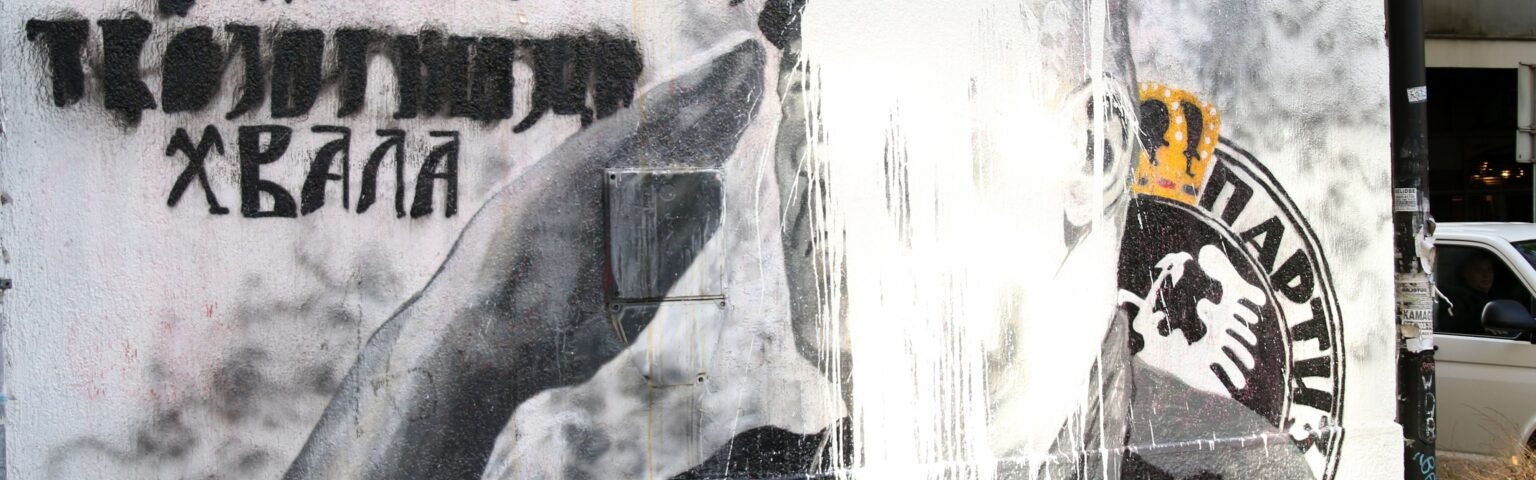
Following the spread of information about Ratko Mladić’s death, hundreds of people took to the streets in the cities of Republika Srpska (Bosnia and Herzegovina). Gathered crowds applauded and shouted to pay tribute to the convict responsible for the most brutal crimes committed in Europe since World War II, chanting his name in unison. Milorad Dodik also urged citizens to “pay tribute to the General.”
In Banja Luka, a banner reading “Eternal Glory” was displayed at a football match, while in Srebrenica, the very town for which the Hague Tribunal tried and accused him of genocide, an event “in memory of the General’s soul” was held. In addition, tributes with lit torches and candles were paid in East Sarajevo, Zvornik, Višegrad, Bijeljina, and Trebinje.
On September 3, 2026, Ratko Mladić’s body was flown from The Hague to Serbia on a government plane. Mladić’s son and grandson were present, along with Serbia’s Minister of Justice, Nenad Vujić. Soldiers of the Serbian Armed Forces carried the coffin, draped in the flags of Serbia and Republika Srpska, off the plane.
On September 6, at the “Rajko Mitić” stadium in Belgrade, the football club “Red Star” paid tribute to the war criminal with a minute of silence. Afterwards, groups of hooligans inside the stadium began chanting Mladić’s well-known slogans, inciting racial and religious hatred, while no one was detained by the authorities.
On September 7, Mladić’s body was placed in the Church of Saint Luke in Belgrade for a civil memorial and farewell ceremony, where Serbian Patriarch Porfirije officiated the service. He was buried with military honors at the Topčider Cemetery, with the Serbian flag, an officer’s cap, and a sword resting on the coffin.
According to reports, approximately 16,000 people attended the funeral. It was striking that countless young people paid tribute to Ratko Mladić, many of whom might not even have been born during the Bosnian War. The funeral was not attended by Aleksandar Vučić, who was hosting a guest from Uzbekistan, though his son was present at the ceremony. High-ranking officials from Serbia and Republika Srpska were also in attendance. Among the Serbian government ministers were Defense Minister Bratislav Gašić, Justice Minister Nenad Vujić, and Culture Minister Nikola Selaković. Representatives of Republika Srpska included Milorad Dodik and Željka Cvijanović, the Serb member of the tripartite presidency of Bosnia and Herzegovina.
The government plane allocated by the Serbian authorities to transport the body, the military personnel, the guard of honor, and the ceremonial volley are clear proof that Vučić’s regime “rewarded” Mladić even after death for his brutal crimes. Pro-government media covered the entire process live and portrayed it as a national event.
Sarajevo’s Inaction
In July 2021, by a decision of the then-High Representative in Bosnia, Valentin Inzko, prison sentences were introduced for the public denial, justification, and glorification of the Srebrenica genocide and war crimes committed in Bosnia.
The platform “Register 145a” – created to record and report instances of genocide denial and glorification of convicted war criminals to authorities (once verified by “Register 145a”, reports are sent directly to the State Prosecutor’s Office of Bosnia), stated that following Mladić’s death, solely on August 27-28, it received approximately 5,000 new reports, including cases of hate speech incitement, yet the prosecutor’s office launched no investigation. The police took no measures regarding the events held to honor Mladić. (To date, the Court of Bosnia has issued only two verdicts for the glorification of war criminals and denial of genocide).
Mladić’s burial with honors, the glorification of a war criminal, and the inaction of relevant agencies regarding these facts provide proponents of the “Greater Serbia” ideology an opportunity to continue praising the “Butcher of Bosnia” with impunity and preaching their ultranationalist ideology.
The Bosnian Muslims Who Never Grew Old
The conviction of Ratko Mladić by the Hague Tribunal and his life sentence imposed legal responsibility on the criminal, but failed to restore a sense of justice for the victims’ families.
The search for and identification of the missing continue to this day. Many families discovered the remains of their loved ones piece by piece in mass graves, while others could not find even a single bone. Thousands of children were left with items dug out from graves as their only keepsake of their fathers.
The imprisonment conditions of the “Butcher of Bosnia” were far lighter compared to the hell that Muslim Bosniaks and their family members endured. Meanwhile, official state policy, beyond the enforcement of formal international rules, through silence or the glorification of war criminals, denies victims’ families the opportunity to heal their wounds, overcome past traumas, and free themselves from the feeling of oppression.
Brussels’ Criticism
Ratko Mladić’s funeral sparked sharp discussion regarding Serbia’s European future.
On September 4, Marta Kos cancelled her planned visit to Serbia. According to her, the repatriation of Mladić’s remains reminds Europe of the dark pages of history. The glorification of the architect of genocide and his state-funerary burial are completely incompatible with the values of the European Union, which demand facing the past, respecting the victims of war crimes, and promoting regional reconciliation, a crucial condition for European integration. Kos emphasized that “values cannot be a subject of trade.”
European Commission President Ursula von der Leyen called the footage from Mladić’s funeral “shocking,” adding that “elements of official support for the ceremony and the presence of certain high-ranking Serbian officials at the funeral are deeply regrettable. They demonstrate an inability to confront the dark chapter of Europe’s recent history and run counter to the values underpinning Serbia’s path to the European Union.”
Paula Pinho, chief spokesperson for the European Commission, stated that Brussels is “studying” the potential consequences Serbia might face. According to Guillaume Mercier, Commission spokesperson for enlargement, these “latest political events” will be taken into account when initiating the next stage of Serbia’s accession process – specifically, the opening of Negotiating Cluster 3, which covers fundamental rights, the judiciary, and freedom of expression.
Aleksandar Vučić described Marta Kos’s decision to postpone her visit as “foolish.” He stated that he did not attend the funeral himself, but “did everything necessary and possible to ensure the funeral took place in a dignified, serious, and responsible manner.” He also noted that the authorities could not ban people from attending the funeral or create “so-called dog cemeteries.”
Serbia’s Divided Identity
Serbia’s divided identity is not defined solely by Ratko Mladić’s solemn funeral and the irrational evaluation of his legacy – for years, the EU candidate country has exhibited severe trends of democratic erosion and a drift toward authoritarianism. According to Freedom House assessments, Serbia, while formally holding multi-party elections, is actually moving toward a semi-consolidated authoritarian regime where key institutions and the media are captured by the ruling party.
The prospect of Serbia’s EU integration is obscured not only by the glorification of war criminals, but also by the government’s persecution of the opposition, restriction of political rights and civil liberties, pressure on independent media and civil society, disregard for Brussels’ recommendations, and constant political flirtation with Russia and China, keeping the country in a deep identity crisis.
Conclusion
The “solemn farewell” to the architect of genocide is an attempt to frame brutal crimes as “heroism” and replace accountability for the past with a fabricated “fairytale” about a war criminal.
Ratko Mladić’s burial with honors points to Serbia’s captivity to the past and the deep moral chasm between European values and ultranationalist revisionism. Instead of the ruling force confronting the dark pages of history, apologizing, and paying respect to the victims, it “rewards” the killer of thousands.
As long as Belgrade places the murderer of thousands on a pedestal of glory, the path to finding missing remains and achieving justice remains an endless nightmare for the victims’ families and against this backdrop, the prospect of Serbia’s European integration grows increasingly blurred and uncertain.
This article was translated from the original language with the assistance of AI tools and revised by the author.