



Author: Nata Koridze, UGSPN Senior Research Fellow
Introduction
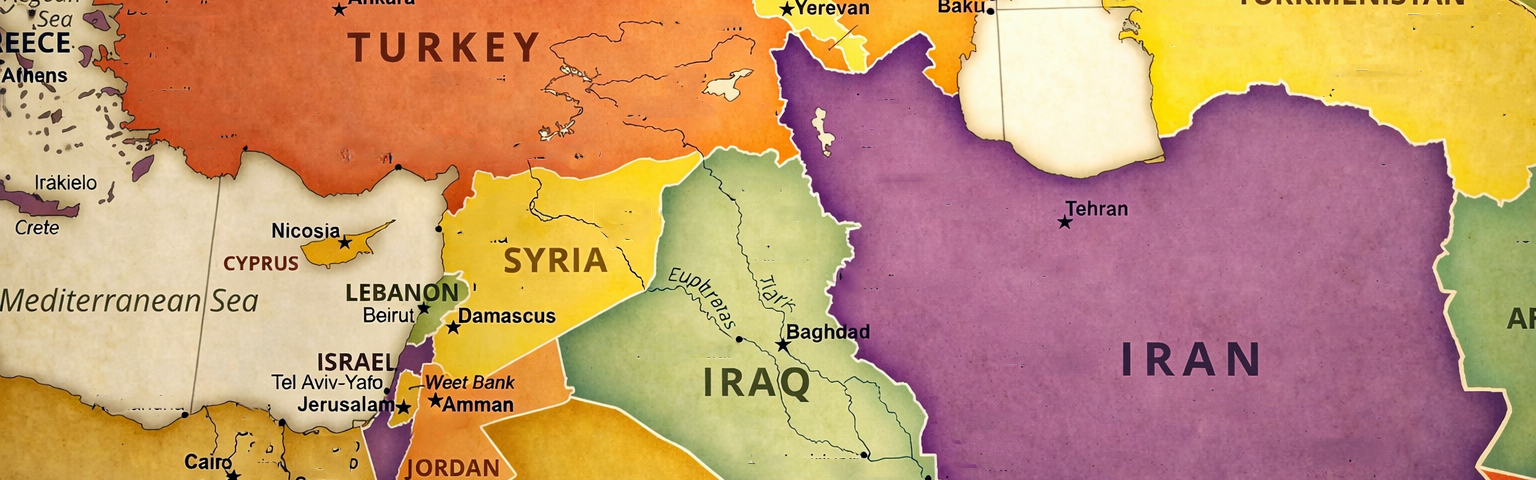
The war in Iran represents a major geopolitical shock with immediate consequences for the South Caucasus. It unfolds directly along the region’s southern boundary, placing the South Caucasus at the intersection of two ongoing wars Russia’s war in Ukraine and escalating conflict in the Middle East. This dual pressure is transforming the region into a critical hinge point between competing geopolitical systems. The South Caucasus is no longer peripheral, but an increasingly central corridor for connectivity, energy flows and strategic competition.
Ultimately, the impact of the war on the region will depend on two key variables: its duration and its outcome, particularly whether Iran’s current regime survives. However, even at this stage, three structural effects are already evident: a deteriorating security environment, the rapid elevation of the region’s transit role and mounting pressure on political trajectories across the region. The following analysis examines how the war in Iran is reshaping the South Caucasus by exacerbating regional insecurity and enhancing the area’s strategic transit role (notably the Middle Corridor and aviation routes), against the backdrop of intensifying geopolitical competition among external powers. Particular focus in this case is given to Georgia, historically regarded as the main Western ally in the region and formerly a strategic partner of the US, although this stance has recently changed.
A Transforming Regional Security Environment
The South Caucasus region, long characterized by unresolved conflicts and external competition, may now exposed to the war in Iran spillover risks.
The drone strikes in Azerbaijan’s exclave Nakhichevan on March 5, 2026, which damaged a school and a local airport and left several people injured, demonstrate how quickly the conflict can extend northward. Even when contained diplomatically, such events underscore the fragility of regional security and the ease with which escalation can occur.
There have been reports of Russia allegedly providing Iran with targeting information for attacking American forces in the Middle East. Kremlin spokesperson Dimitry Peskov initially declined to comment on the alleged assistance, however later Russian Foreign Minister Sergey Lavrov acknowledged some forms of assistance, in particular transfer of military-grade products to Iran, but not intelligence-sharing. This suggests the consolidation of a broader anti-Western alignment in the region. As South Caucasus is located in immediate proximity to the ongoing war, this increases the likelihood of it becoming indirectly embedded in a larger confrontation between geopolitical blocs conducting the conflict.
Beyond immediate security risks, a prolonged war could generate wider systemic pressures on the region and its countries:
- potential refugee flows from Iran into the region;
- disruptions to some trade and energy routes, while increasing profile of the others;
- increased use of the region for sanctions evasion and logistical bypass;
- and the reinforcement of authoritarian governance patterns under conditions of insecurity.
The Strategic Rise and Vulnerability of the Middle Corridor
One of the most immediate consequences of the Iran war has been the accelerated strategic importance of the South Caucasus as part of the Middle Corridor linking Europe and Asia.
With Russian and Iranian routes increasingly constrained, transit flows both physical and aerial have been redirected through a narrow corridor crossing the Caspian, the South Caucasus, and Türkiye.
The most visible manifestation of this shift is in aviation. The closure or riskiness of Iranian airspace has forced global airlines to reroute flights, producing a dramatic surge in overflights across the South Caucasus. Air traffic over Georgia, for example, has increased several-fold, turning the sky above it into one of the busiest air corridors between Europe and Asia.
Beyond a logistical adjustment, it is a real-time illustration of the region’s geoeconomic centrality. Connectivity is no longer an abstract concept but a physically compressed and highly exposed system.
However, this centrality comes with acute vulnerabilities:
- concentration of global transit in a narrow and fragile corridor;
- proximity to active conflict zones;
- increased exposure to geopolitical competition among big players, such as the US, EU, China, Russia, and Türkiye;
- and heightened risks of disruption from even limited escalation.
Thus, while this warincreases incentives for regional cooperation (notably between Armenia and Azerbaijan, and Armenia and Turkey) it also raises the stakes around key connectivity projects, particularly those that intersect with Iranian strategic interests.
Iran, Regional Connectivity, and the TRIPP Factor
Iran’s role in the South Caucasus has traditionally been that of both an economic partner and a geopolitical counterweight. The war is now destabilizing this role with implications for changing the balance of power in the region, while sharpening Tehran’s sensitivity to emerging regional projects.
This is particularly evident in reactions to the Trump Route for International Peace and Prosperity (TRIPP) a proposed transit corridor connecting Azerbaijan to its Nakhichevan exclave through Armenian territory, running just north of the Iranian border.
Iranian messaging so far has made two points clear:
- instability in Iran could alter the regional balance in ways that affect peace arrangements between Armenia and Azerbaijan;
- and Tehran views any external transit project near its borders through a security lens, particularly if it carries potential military or strategic implications.
In essence, TRIPP has become more than an infrastructure project it is a geopolitical fault line. It reflects competing visions of regional order: one centered on Western-backed connectivity and normalization, and another shaped by Iran’s desire to preserve influence and prevent strategic encirclement. The war therefore increases both the urgency and the fragility of such initiatives. While weakened Iranian capacity could open space for new corridors, heightened insecurity and geopolitical competition could just as easily derail them.
A Region Under Diverging Pressures
The impact of the war is uneven across the South Caucasus, but the broader regional effect is one of fragmentation rather than convergence.
The war in Iran has the potential to disrupt some trade and energy routes in the South Caucasus, primarily through indirect effects rather than immediate physical disruption. The following risks could be anticipated: the instability could impact North–South transport corridor- a multimodal network of around 7,000 km connecting India, Iran, Russia and Central Asia via ship, rale and road. The instability would likely affect trade flows involving Armenia and other regional actors that depend on Iranian territory to access southern markets. At the same time, broader regional insecurity could lead to increased transport costs, insurance premiums and logistical uncertainty, which would affect regional supply chains.
Strategically, however, the conflict could also increase the importance of the South Caucasus as an alternative east–west transit route, particularly via the so-called Middle Corridor, which links Central Asia to Europe through Azerbaijan and Georgia. However, this growing importance could also expose the region to greater geopolitical competition and security risks.
Armenia’s relations with Iran have been defined primarily by pragmatic cooperation shaped by geography and economic necessity. With its borders with Turkey and Azerbaijan closed for almost three decades, Armenia has relied on Iran as an important transit route and energy partner, particularly through gas-for-electricity arrangements and transport connectivity projects. This has produced a relatively stable bilateral relationship centered on economic complementarity and Armenia’s need to mitigate the effects of long-term regional isolation. At the same time, the bilateral relationship reflects converging security interests. Iran has consistently supported Armenia’s territorial integrity and opposed regional corridor projects that could alter existing borders, while Armenia has viewed Iran as an important partner for diversifying its external relations. Armenia–Iran relations are thus best characterized as a pragmatic partnership based on overlapping economic and security interests.
As the war in Iran drags on, Armenia faces the most immediate structural risks due to its longstanding reliance on Iran for trade, energy exchanges, and external connectivity. Disruptions to these channels—combined with the potential for refugee inflows—could significantly strain Armenia’s economic and political stability. On the other hand, the war might encourage deepening of Armenia’s structural cooperation with Azerbaijan and Turkey, against the background of the recent normalization with Azerbaijan.
Iranian Ambassador to Armenia said on March 2 that the weakening or defeat of Iran “would also harm Armenia”. Armenia has been doing a careful balancing act, calling to the fast restoration of peace in Iran. There were telephone exchanges between PM Nikol Pashinian and Iranian President Masoud Pezeshkian, as well as respective Foreign Ministers of both countries. Armenia has also sent humanitarian aid to Iran.
Azerbaijan, has had a complicated relationship with Iran due to the close cooperation with Israel and Turkey in the military sphere. Relations between Azerbaijan and Iran have been characterized by a combination of pragmatic engagement and underlying strategic competition, shaped primarily by security concerns, regional alignments, and domestic sensitivities rather than ideological differences.
At the same time, tensions have periodically been fueled by disagreements over regional transport corridors, competing visions of the post-2020 South Caucasus order, and Iran’s sensitivity regarding Azerbaijani nationalism given its own large ethnic Azerbaijani population. Despite these frictions, both states have generally sought to preserve functional diplomatic and economic relations, reflecting a mutual interest in avoiding escalation along a shared and strategically important border.
The day after the alleged Iranian drone attack on Nakhichevan on March 5, 2026, Azerbaijani authorities have alleged the exposure of Iranian-linked espionage and sabotage networks targeting diplomatic and strategic infrastructure. At the same time, Azerbaijan has attempted to limit further deterioration by maintaining diplomatic engagement and undertaking confidence-building gestures, including humanitarian assistance during the ongoing war. This dual approach suggests that both countries are attempting to compartmentalize tensions in a relationship defined by geographic proximity and competing, but not irreconcilable, regional interests.
As the war in Iran has already resulted in spike in energy prices, Azerbaijan may may benefit from higher energy prices in the short run. However it also faces security exposure through Nakhichevan and potential volatility linked to the large Azerbaijani population in Iran, estimated to be more than 20 mln people, although exact number is unknown. Meanwhile, economic gains are likely to be partially offset by inflationary pressures and regional instability.
Georgia is the only country in the region which does not border Iran. Iran-Georgia relations with Iran have largely been defined by pragmatic economic engagement and cautious political balancing rather than deep strategic alignment. However, they are currently characterized by the rapid expansion of economic, commercial and investment ties, as well as the strengthening of political dialogue. According to a report from Transparency International-Georgia, trade has tripled and foreign direct investment from Iran has risen fivefold since 2013.
Meanwhile, Georgia’s shifting foreign policy orientation complicates its ability to anchor itself within a stable Western framework at a time, when ongoing developments reinforce the South Caucasus as a space of competing alignments between regional and global powers. Georgia is becoming a central transit node particularly in aviation and logistics while also facing growing concerns about increasing external influence, including from Iran and Russia. While most of the focus has been on Georgia’s rapprochement with Russia and China, the growing influence of Iran on the country has been less addressed. The trend however did not go unnoticed in Washington, with criticism towards the Georgian Dream government heard in the U.S. Congress. Georgian authorities have been denying the growing influence of Iran of once strongly pro-Western country, in spite of a number of controversial steps, such as attendance by the Georgian Deputy Foreign Minister of a reception in the Iranian embassy in Tbilisi on February 11, 2026 to celebrate “the anniversary of arrival of Georgians in Iran” – a historical episode that is known in Georgia as forceful relocation of Georgians from the Georgian Kakheti region to Iran in the 17 century.
There have been reports of rapid expansion of Iranian influence, particularly among the Azerbaijani Shia minority in the Kvemo Kartli region of Georgia. This encompasses operation of the US-sanctioned Al-Mustafa International University, which reportedly promotes Tehran-aligned doctrine and cultivates loyal to Tehran clerical networks. the recent extensive report by the Hudson Institute on the expansion of the Iranian influence in Georgia speaks of Islamic Revolutionary Guard Corps (IRGC) using the trips of Georgian Shia believers to Iran and Iraq for pilgrimages, for recruitment, indoctrination and intelligence spotting. The report also notes the work of Iran-linked charitable organizations of pro-Iranian media platforms helping enhance Iran’s influence. The other aspect of the mentioned report, citing particularly the surge in Iranian company registrations in Georgia and a sharp increase in Iranian imports after 2022, focuses on the economic penetration and sanctions evasion network aimed at turning Georgia into a sanctions-evasion hub. The “sanctions evasion-project” has been enabled by the current authorities, another report claims, noting that “between 2022 and 2025, 72 companies were responsible for importing Iranian oil and petroleum products, and many of these importers are linked to donors, state contractors, and even officials of the ruling party.”
The summoning of the authors of the report in the beginning of March this year by the Georgian State Security Services was criticized by the U.S. Helsinki Commission in its March 9 statement. The statement in particular said that rather than investigating the authors of the report, Georgian authorities “should be concerned about its findings” and stressed that a “clear and systematic picture of the expanding influence” of Iran in Georgia “runs counter to the interests of both Georgia and the United States.”
Renewed U.S. Interest in Georgia?
Despite the significant downgrade in bilateral relations between Georgia and the U.S., suspension of the strategic partnership, and against the background of absence of high-level visits and meetings, a representative of the U.S. State Department’s Bureau of European and Eurasian Affairs Peter Andreoli’s visited Georgia at the end of March this year. The U.S. representative visited strategic infrastructure projects such as the Poti and Anaklia sparking speculations about the renewed U.S. interest in Georgia’s regional role and its economic connectivity, especially with regard to the Middle Corridor and against the background of the war in Iran.
This was followed by the telephone call on March 30, 2026 between the U.S. Secretary of State and the Georgian Dream Prime Minister Irakli Kobakhidze. The first such high-level interaction since the U.S. suspended the strategic partnership with Georgian in 2024, was ostensibly related to the developments in and around Iran. The U.S. State Department’s official readout said that the sides discussed “the areas of mutual interest,” including “security in the Caucasus and Black Sea region.”
The next day the Iranian Ambassador to Georgia warned of a “price” for countries that aid the United States. He noted that: “One fact about Donald Trump and American politics cannot be overlooked: when some countries, whether inadvertently or hastily, lend their space and territory to external adventurists, they sooner or later pay the price within their own borders.” He also warned that “no country is immune to the consequences of a regional crisis” which is “much closer than it appears at first glance.” The lengthy Facebook post that Ambassador Ali Moujani wrote was later taken down, with only a shorter message on Twitter remaining.
The statements by Iran’s ambassador to Georgia should be understood not simply as a reaction to a bilateral diplomatic exchange, but as part of a broader pattern of wartime signaling aimed at shaping the behavior of third countries. In the context of the ongoing conflict involving Iran, such implicit threats serve as instruments of deterrence, intended to discourage states from facilitating, even indirectly, U.S. or Western military and logistical activities.
For Georgia, these remarks highlight the structural constraints faced by small states in geopolitically sensitive regions: even absent direct involvement, their strategic location and political alignments may expose them to coercive rhetoric and pressure. More broadly, the episode illustrates how the conflict’s strategic effects are already extending beyond the immediate theater of hostilities.
While the war in Iran underscores the importance of Georgia’s geographic location, connectivity and its role in the Middle Corridor, it also requires increasing the salience of risk management in Georgia’s foreign policy posture.
The war in Iran could affect Georgia primarily through its role as a transit state within Eurasian trade and energy corridors. Disruptions to Iran-linked connectivity routes may reduce regional north–south trade flows while simultaneously increasing the strategic importance of Georgia as part of alternative East–West corridors, particularly the Middle Corridor linking the Caspian region to Europe via Georgian Black Sea infrastructure. At the same time, heightened regional insecurity could increase transport costs and risk exposure for Georgia’s logistics and energy transit functions.
Implications for Russia and the Wider Regional Order
The trajectory and the length of the war in Iran will directly affect Russia’s position in both- the South Caucasus and Ukraine.
Iran has been a key partner for Russia, particularly in military supply chains. A weakened Iran would constrain Russia’s operational capacity and further erode its network of authoritarian allies. Conversely, deeper Russia–Iran coordination could strengthen an anti-Western axis with implications for the South Caucasus in the long run.
For the South Caucasus this means that:
- a weakened Russia could reduce coercive pressure;
- a resilient or strengthened Russia could reassert influence more aggressively, particularly in a fragmented regional environment.
In either scenario, the South Caucasus remains exposed to external power competition with limited internal capacity for collective balancing.
However, conversely, a prolonged war in Iran would likely provide Russia with significant economic relief by maintaining high global energy prices and increasing demand for its oil exports. This would strengthen Moscow’s fiscal capacity to continue financing its war against Ukraine. Disruption to energy flows through the Strait of Hormuz, along with broader supply uncertainty, has pushed oil prices above $100 per barrel, boosting Russia’s export revenues and easing pressure on its state budget. Meanwhile, the Trump administration’s temporary suspension or waiver of certain sanctions on Russian oil exports introduced partly to stabilize global energy markets amid the Iran conflict has effectively given Russia additional market access and revenue streams, despite the ongoing war in Ukraine. Taken together, higher energy revenues and partial sanctions relief risk prolonging the war in Ukraine by enhancing Russia’s financial resilience and sustaining military expenditure, while weakening the intended economic pressure of Western sanctions.
Conclusion
The war in Iran could be a pivotal moment for the South Caucasus region. It is a security crisis, a geoeconomic reconfiguration and a political stress test for the region all at once. The South Caucasus is being pulled into a new strategic reality where its role as a transit corridor is increasing even as its vulnerability grows. The crowded skies above the region are a visible symbol of this transformation: a narrow passage through which global flows now depend, and which is exposed to disruption from multiple directions.
Beyond security and connectivity, the war in Iran carries significant implications for governance trajectories in the South Caucasus as broad scenarios emerge. The survival of Iran’s current regime particularly if coupled with strengthened Russia–Iran coordination would likely reinforce authoritarian tendencies across the region. Conversely, a major political transformation in Iran could weaken authoritarian networks and create openings for democratic development.
The regional outcome will depend not only on Iran but also on how external actors engage and how local political systems respond. In this context, the direction of key regional states particularly those with ambiguous foreign policy orientations will be critical in determining whether the region moves toward greater openness or deeper illiberal consolidation. Ultimately, the region’s trajectory will depend on the duration and outcome of the war. A prolonged conflict risks entrenching instability and external competition. A decisive shift particularly within Iran could redraw the regional balance of power. In either case, the South Caucasus is no longer on the margins of global geopolitics. It is becoming one of its most consequential crossroads.