




 Georgia and the Black Sea: Strategic Relevance in ...
Author: Nata Koridze
Executive Summary
The Black Sea has become a critical strategic area for Europe, due to Russia’s war in Ukraine and mounting worries about European security, energy, and connectivity. Georgia, at the heart of the Black Sea–South Caucasus nexus, is a structurally important transit state along the Middle Corridor, linking Europe, the Caspian region, and Asia. However, Georgia’s credibility with the European Union, NATO, and the United States has been weakened by its political choices marked by authoritarian trends and tacit accommodation with Russia, despite its geographic and infrastructural assets.
Georgia faces two clear paths: it can function mainly as a transit corridor and risk marginalization and de facto integration into Russia’s sphere, or it can pursue full alignment with democratic, Western-oriented structures. The former path means authoritarian consolidation, political isolation on international scene and loss of strategic agency leading to the de-facto loss of sovereignty. The latter path requires political clarity, institutional rebuilding, reversal of authoritarian trends and proactive engagement with Euro-Atlantic partners. In return it offers long-term security, autonomy, and regional relevance. Allowing Georgia to fall under Russia’s influence would harm not only Georgia, but the West as well. For the West, it would mean the retreat of liberal democracy in the region, the loss of strategic influence in the South Caucasus, and the loss of credibility in the Black Sea region.
 After Putin: Decoding Alternative Power Clusters, Interest Alignment ...
Putin’s Russia is directly associated with the so-called power-vertical (vertical vlasti) in which every
major political decision regarding structural changes is linked to the Kremlin, i.e., Putin and his
entourage. Nonetheless, as in every authoritarian system, personal loyalty does not preclude from
building informal alliances and shared interests between powerful actors, whether political or eco
nomic. As there is no way of changing the political regime in Russia democratically, and the only
remaining option is a coup d’état-like scenario, the key question remains – who will become Putin’s
successor, and consequently, which powerful actors will build alternative power centers rivaling for
political survival and ultimate political dominance in post-Putin Russia?
While focusing on the mentioned puzzle, the research project followed the logic of the sequence of
analytical steps. First, the snapshot of the current situation in Russia, i.e., a comprehensive analysis
of the socio-political and economic status quo was done, in which major sectors of Russia’s politi
co-economic fabric were reviewed and assessed. The sectoral dynamics review was followed by
an analysis of major actors, their relevance, and their interests in respective sectors. These included
both political actors (individuals and institutions) as well as oligarchs and regional elites, with their
respective sector-linked power, financial resources or personal ties. In the end, the hypothetical
scenario, in which Putin’s figure no longer exists and power-vertical becomes questionable, made it
possible to construct a number of prospective rivaling power-centers, in which personal, corporate,
political, and financial interests of powerful actors converge. These power-centers will inevitably try
to acquire political legitimacy, oligarchic resource base, and hard (military) power, to compete and
survive. All these findings are addressed by this research, sufficiently elaborated and presented for
further discussion.
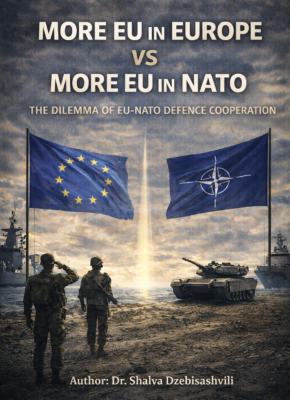 More EU in Europe vs More EU in ...
Disclaimer:
This article was first published in Un cambio de época: América del Norte y la intervención rusa en Ucrania. Geopolítica y nuevas dinámicas de la globalización.
Abstract
This paper examines the evolving dilemma of European defence integration through the prism of institutional competition between the EU and NATO. It analyzes the structural, political, and strategic tensions shaping EU–NATO defence cooperation in the context of renewed great-power competition and Russia’s war against Ukraine. The study situates the discussion within broader debates on European strategic autonomy, transatlantic burden-sharing, and institutional duplication, assessing whether deeper EU defence integration strengthens or fragments the Euro-Atlantic security architecture. By exploring initiatives such as PESCO, the European Defence Fund, and the EU Strategic Compass alongside NATO’s force posture adaptation and enlargement dynamics, the paper evaluates the degree of complementarity and competition between the two organizations.
The analysis argues that the core challenge is not a binary institutional choice but the inherent impossibility of functional complementarity and interdependence. While greater EU defence capabilities may enhance European resilience and contribute to fairer burden-sharing within NATO, misaligned political visions, capability gaps, and fragmentation of national interests turns the EU in terms of defence capacity and mission execution into a inherently deficient structure . The paper concludes that sustainable European security requires strengthening EU defence instruments while anchoring them firmly within NATO’s collective defence framework (Europeanization of NATO).
 Digital Authoritarianism: Logics, Practices, and Transformation of Political ...
Over the past two decades authoritarian governance has undergone a significant transformation driven by the expansion of digital technologies. This article examines the rise of digital authoritarianism as a distinct mode of rule in which surveillance systems, algorithmic content control, and information manipulation are embedded within the routine structures of governance. It argues that contemporary authoritarianism is not merely an updated version of earlier coercive regimes, but a qualitatively different and more resilient form of rule characterized by greater subtlety, precision, and durability.
The article traces the evolution of digital authoritarian practices from early internet regulation to their consolidation in the 2010s, situating the concept within ongoing definitional debates that contrast intention-based, promotion-based, informational, and practice-oriented approaches. It then analyzes the political logic of digital authoritarianism, focusing on how information control, compliance, and legitimacy are managed through digital means, before outlining the core pillars of digital authoritarian rule: surveillance, censorship, and disinformation. The final sections assess international responses and the diffusion of digital authoritarian practices across regime types, with particular attention to hybrid regimes and small democracies, including a case study of Georgia as an illustration of how digital control tools can emerge even in formally democratic contexts amid political polarization and democratic backsliding. The article concludes that digital authoritarianism poses a structural challenge to liberal governance that existing regulatory and normative frameworks remain poorly equipped to address.
 The Role of Independent and Impartial Media in ...
Abstract
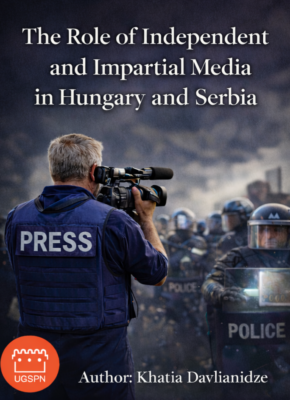
In an era marked by the global decline of liberal democracy and the concurrent rise of authoritarian regimes, the role of independent and impartial media has become increasingly pivotal.
This article investigates the role and influence of media institutions operating free from governmental or partisan control within authoritarian contexts, where regimes systematically curtail freedom of expression and monopolize the flow of information, and analyzes the capacity of the independent media to promote transparency, uphold accountability, reinforce the rule of law, and foster political engagement among citizens. Specific focus is given to the role and impact of investigative journalism in autocracies as a mechanism for exposing abuses of power and systemic corruption.
In addition to theoretical analysis, the article presents case studies from two authoritarian countries - Serbia and Hungary – where independent media outlets have played a critical role in revealing political manipulation, abuse of power, suppression of critical thought, human rights violations, and corrupt practices by ruling elites. Moreover, the paper explores the media’s contribution to the emergence of civic resistance, the mobilization of anti-government protests, and the imposition of political accountability on those in power.
The article concludes that in environments characterized by institutional capture and democratic backsliding, independent media constitutes a vital safeguard against authoritarian consolidation and serves as a cornerstone of democratic resilience.
 The Evolution of Sino-Georgian Relations Since 2012: Strategic ...
This article provides a comprehensive analysis of the transformation in Sino-Georgian relations since 2012, highlighting how bilateral ties have evolved from limited economic engagement into a formal strategic partnership. It situates this evolution within China’s more assertive foreign policy under Xi Jinping, embodied in the Belt and Road Initiative and Georgia’s strategic recalibration under the Georgian Dream government. The study examines China’s motivations, including logistical access via the Middle Corridor, political diversification in the Black Sea region, and symbolic partnership with a cooperative democracy. It explores Georgia’s calculus in seeking alternative sources of investment, hedging against Western conditionality, and leveraging the relationship for domestic legitimacy. The article then assesses key risks: the asymmetry of power and unmet expectations, the tension between Georgia’s Euro-Atlantic aspirations and deeper ties with China, the waning momentum of the BRI, and the fragility of a pragmatism-based partnership. In conclusion, it argues that without stronger institutional mechanisms and clearer strategic objectives, the Sino-Georgian partnership is likely to remain symbolic rather than transformative, offering cautionary lessons for small-state diplomacy in a multipolar world.
 The Cyber Dimension of the Israel-Iran War: Implications ...
Author: Megi Benia, UGSPN Affiliated Fellow
The June 2025 Israel-Iran War introduced a new and alarming dimension to regional conflict: the deep integration of cyber warfare with conventional kinetic strikes. This paper examines the cyber operations launched by both states during the brief but intense conflict, detailing their targets, methods, and strategic effects. It analyzes how Israel targeted Iranian financial and maritime infrastructure while Iran responded with disruptive attacks, disinformation, and widespread surveillance manipulation. The study then explores the profound implications of this digital battlefield for regional security, modern military doctrine, international law, and escalation dynamics. Based on open-source intelligence and expert analysis of pre-existing capabilities, the paper traces how both nations leveraged their cyber arsenals not just as tactical tools but as potent psychological weapons. The digital spillover into neighboring Gulf states and the deliberate, although limited, nature of the attacks highlight the emergence of new, unwritten rules of engagement. The paper concludes with lessons learned, which can pave the way to develop robust deterrence strategies, resilience frameworks, and diplomatic norms adequate to meet the challenges of future hybrid wars, where the digital front is inseparable from the physical one.
 The Grassroots Reimagination of Europe in Georgia: Youth ...
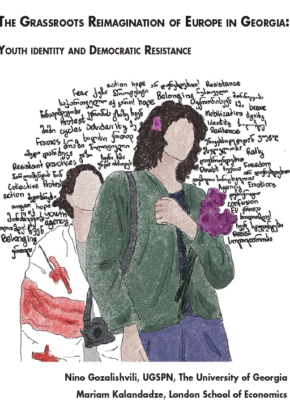
Youth resistance in Georgia has emerged as a key actor within the landscape of non-parliamentary opposition. This paper examines how university students mobilised during the 2024 protests, not simply to contest a piece of legislation, but to engage in broader acts of political redefinition and identity reclamation. Drawing on twenty-eight ethnographic diaries, the paper investigates how emotional, symbolic, and generational practices are deployed by young activists to articulate belonging, citizenship, and resistance outside formal political institutions.
Rather than acting in coordination with the parliamentary opposition, students build their own oppositional identity through emotionally charged practices such as “identity marches,” protest rituals, and symbolic appropriation of public space. These actions reveal how emotions—particularly anger, hope, fear, pride, and confusion—function as more than expressive tools: they structure participation, forge horizontal solidarities, and sustain collective motivation over time.
The analysis highlights how students reinterpret national and European belonging as affective and civic projects, positioning themselves in opposition to both Russian influence and domestic political elites. Their actions suggest a transformation of Europeanisation from a top-down institutional narrative into a lived, grassroots civic identity. This case contributes to broader discussions on how extra-institutional opposition actors generate political agency in post-communist hybrid regimes.
 The Role of Special Services in Waging Russian ...
Author: Nikoloz Kavtaradze
Under Vladimir Putin’s leadership, Russia has pursued the strategic objective of reestablishing itself as a major global actor, evoking the Soviet Union's historical influence. This ambition reflects a broader goal of challenging Western hegemony and positioning Russia as a pivotal player within an emerging multipolar world order. To achieve these ends, the Kremlin has initiated a comprehensive campaign against Western liberal democracy. Central to this strategy is the promotion of authoritarianism as a superior model to democracy, the consolidation of formal and informal alliances among authoritarian, non-democratic, and semi-democratic states, and the systematic disruption of the international order founded on the principles of rule-based governance.
Given the Russian Federation's constrained military and material resources for direct confrontation with the West, it has chosen to conduct its declared war in the so-called "grey zone," operating below the threshold that would trigger significant international responses to its hostile and illegal actions. This style of battle, known as hybrid warfare in Western cultures, came under increased focus after Russia launched a full-scale military invasion of Ukraine in 2022, prompting the West to respond more appropriately. This reaction was reasonable, given that the goals of Russian hybrid warfare were to weaken Western strategic alliances, undermine liberal democracy, and exert decisive influence over the rules-based international order and global political systems in order to advance its own strategic interests.
 Annual Report 2024
UGSPN Annual Report 2024
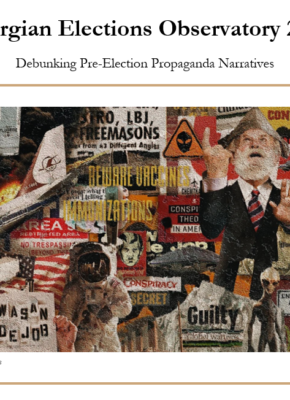 The Georgian Elections Observatory 2024
The Georgian Elections Observatory (#GEObservatory24) is a short-term initiative focused on fact-checking pre-election narratives in the lead-up to the parliamentary elections on October 26. Unlike traditional fact-checking platforms, this project goes beyond verifying individual claims by analyzing entire narratives. It combines political analysis with fact-checking and media analysis to provide a comprehensive understanding of the pre-election discourse. The project is supported by the Fojo Swedish Media Institute in collaboration with the Investigative Media Lab (IML) and the UG Security, Policy, and Nationalism Research Center (UGSPN).
DISCLAIMER: The views expressed in these stories do not necessarily reflect those of the listed organizations.
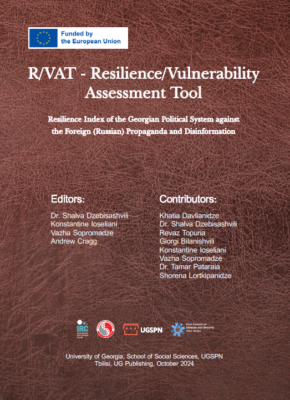 Resilience Index 2024
As Georgia increasingly struggles to comply with its Europe- an commitments and, simultaneously, Russia intensifies its in- formation campaign (disinformation and propaganda) within Georgia, the question of whether Georgia’s political system and institutions are resilient enough to counter this threat be- comes more relevant than ever before. Therefore, this research project applies a new assessment model (R/VAT) of national resilience to analyze the resilience capacity (vulnerability) of the political system (domain) and its major actors against the threat of proliferation of malign Russian narratives, thereby generating the annual political resilience index (PRI), which can also be applied in other national contexts.
 Download